Saturday, January 16, 2016

Maddy's Baptism

For most Filipino-Chinese, the baptism is celebrated at the same time as the baby's first birthday, which is referred to as 周晬 [Zhou Zui], or in Fookien - to tse.  Literally, to tse celebrates the baby's "one full year" and welcoming into the Chinese family.  Baptism, on the other hand, refers to the baby's welcome into God's family. The two occasions are jointly celebrated, primarily, I believe, to save on costs! However, we had ours when Maddy recently turned 7 weeks old.

A brief note on the paperwork involving a Catholic baptism --> First, we had to reserve a time slot with Sacred Heart Parish's baptistry. The reservation itself needed no payment or additional requirements.  However, the baptismal application needs to be submitted at least 2-3 days before the baptism ceremony itself. The application should be accompanied with: 

(a) the written approval/endorsement from the parish covering the territory where the parents live (in our case, it was St. Therese).  This was fairly easy to secure, though we needed to pay around Php500.00, if I remember correctly, and we needed to submit the photocopy of our marriage certificate and Maddy's Certificate of Live Birth and to present the original Certificate for comparison. We got the parish written approval/endorsement in less than 10 minutes;

(b) a photocopy of the marriage certificate and baby's Certificate of Live Birth; and

(c) a photocopy of the baptismal certificate of at least one (1) of the godparents, as proof that at least 1 of them is Catholic.

Second, the parents and at least a pair of godparents have to attend a pre-Jordan seminar at Sacred Heart, which is a seminar on what baptism is about, etc. Sacred Heart's schedule was only on Fridays, 7-8pm, and I disappeared about halfway through the seminar to pump breastmilk in the car. 

Third, you had to pay the parish Php100 for every godparent you had, and provide a stipend to the priest officiating the ceremony, if you were bringing your own. In our case, we invited Msgr. Ilde, also a friend of the family's, to officiate.

Maddy's baptism was slotted at 9am, though we started around 9:15am or so already since we arrived a bit late, due to traffic caused by closed/blocked roads for the Cebu Marathon that same morning. 

(drinking a bottle of earlier pumped milk so I wouldn't have to nurse during the ceremony)

(Maddy was squirming a lot and crying the entire time)

(apparently, the white baptismal gown is put on as part of the ceremony, signifying being shrouded in Christian dignity)

(with the ninongs and ninangs, with those from Manila flying in that morning just for the day)

(with my family who also flew in just for that day)

Lunch reception followed at The Ching Palace. It was just a small event, since we still have the first birthday party to save up for at the end of the year! We couldn't resist though at least having a dessert buffet! The cake was awesome as it was half banana sponge cake with choco-caramel filling, and half cookies and cream sponge cake with cookies and cream filling!

(the prettiest dessert buffet from LMG Pastry Chef! the cake was exactly as I had envisioned when I sent the owner my pegs)

It was a sweet and simple celebration, with close family and friends, and we couldn't be more thankful to all those who flew in from Manila just to celebrate with us.

*more pictures during the reception to follow as soon as I get ahold of the other camera used*


Thursday, January 7, 2016

Maddy's First Month, First Christmas and First New Year!

By the time Christmas rolled over, Maddy had just turned a month old. [As of this writing, she's almost 7 weeks old already]

Take heed: a four-week old newborn has no schedule whatsoever. For one, newborns cannot distinguish day time and night time yet. While adult sleep is based on circadian rhythms, where our exposure to light guides our internal clock, newborns don't have a circadian rhythm yet.  Second, newborns really sleep more than adults do - around 15-16 hours a day, spread over several naps.

So for the first 4 weeks post-partum, I would cry in earnest out of exhaustion. She would be asleep in a consistent pattern of 2-3 hours during the day, but would be up and fussy at night. I was feeding her during the ungodly hours of 2am and 4am. Then I had to be up by 6:30am so I could hand her over to the yaya, so that they could go out for morning sunlight to prevent jaundice. I would then get around 30 minutes of sleep, before the yaya would knock on my door telling me Maddy wants to be fed. If I was lucky, sometimes I'd get an hour of sleep instead. 

I would handle the exhaustion by taking naps during the day when Maddy was also napping. I also had work-withdrawal symptoms. I have been so used to being so busy and active, that lounging around the house at my baby's beck and call was mentally draining. So I was checking my work emails during the first few weeks even if I was on maternity leave. I would also call up my officemates and just chat for a few minutes. 

Aside from napping, I credit surviving the first 4 weeks to the following:

1. My in-laws - They are really a godsend. My own family is in Manila, so aside from the visit from my siblings and a few friends, I was pretty much by my lonesome the whole day.  Maddy was mostly asleep though through all of the visits!

(Uncle Jeric and Kriska)

(Auntie Moe)

(Di-yi and Sah-yi)

(Auntie Miki and Leah)

My MIL would come here often, so she could help watch Maddy while I get my much needed rest. Since my brain also couldn't function the first couple of weeks to plan our house menu and groceries, my in-laws came over with food. When I started pumping to store milk, my MIL would watch Maddy for a few hours while I left the house to go to the mall to unwind.

(Mom)

2. Our Yaya Bibit - Yaya Bibit is our helper's aunt, which was a relief because at least she's not a random stranger. What I love about her is that she's already a mother to 3 kids, so she has a lot of experience with caring for newborns. She's also kind and very motherly. At first we were inclined to hire someone younger, who could work faster, and could read well (to recite and sing nursery rhymes and songs to Maddy). But after seeing how Yaya Bibit has been the past couple of months, I'm convinced we made the right decision. However, a word of advice regarding older yayas who are also themselves mothers - they will be used to a certain way of handling children as they have handled theirs, which may not be appealing to you. For example, Bibit has a habit of over-wrapping Maddy with blankets, convinced that it's cold ... when it's not. I keep telling her the city is not the same as the province, where it's cooler. She also pats Maddy to soothe her a bit too strongly than we'd like, so we point it out to her.

(At the Wong-Castillo Christmas Party; Yaya Bibit is a bit shy, didn't want to look at the camera)

3. Have a routine

No matter how unscheduled Maddy's first weeks were, I still tried to put a routine in place. This helps develop and set Maddy's biological clock. 

First, we always make sure it's bright with sunlight in her room or where she sleeps and we don't minimize regular daytime noises like the helper's radio, or the window to her room is open so the barking dogs and the neighbors' karaoke can still be heard. We just try to avoid really loud sounds which can wake her up like banging pots and pans.

Second, we try to have a regular morning bath time schedule between 7:30-8am. When I get back to work, we'll need to leave the house by 8am to drop her off at my in-laws', so I need Maddy to be used to waking up and getting ready at or before 8am.

Third, we talk, sing or play with her when she is awake. Sometimes, she prefers to quietly just move around in her crib so we just talk to her in equally quiet, soothing voices so we don't overstimulate her.

Fourth, we have a bedtime routine where at around 7-8pm when she's in between feeds or in a quiet-awake mode, we give her a sponge bath and change her into her pajamas. I then nurse her while either reading a story to her, playing her favorites like Michael Buble, Il Divo or Rod Stewart or also singing her favorites - A Whole New World, Can You Feel the Love Tonight, and classic Chinese songs which I still remember like 梅花, 龙的传人, 月亮代表我的心,or Andy Lau's 中国人! Haha!

We also make our bedroom, which is where she sleeps at night, "sleepy" by opening the aircon already, dimming the lights, and keeping our voices to a murmur.

The bedtime routine was hard to maintain over the holidays when dinners ran long and relatives would want to play or hold her even when she's sleepy, but we're back to regular programming now.

4. Keep a logbook

Lactation consultants and some midwives and pediatricians recommend keeping a log of the baby's feeding schedules (and for lactation consultants, which boob side did you feed with) and dirty/wet diapers, to monitor if the baby is being sufficiently fed.

For the first few weeks as I was getting a handle on breastfeeding and developing a proper milk supply, I would always note which boob side I fed with, so I would remember to feed with the other boob the next session. It was harder to remember that little detail before since I had so little sleep. Now though that I feel more like my regular self and considering that I've started pumping, it's easier to me to remember which boob I fed with, since it's the unoffered breast that I pump. 

My logbook contains her feeding times and sleeping times, including the number of or when a wet or dirty diaper was changed. Personally, I also added another column for how many hours/minutes of nap or sleep time I got within the day. I needed to do this because the only way I can pyschologically feel well-rested is if I know I've gotten an accumulated 6-7 hours of sleep. Yes, my sleep now is a sum total of naps. I have not had more than 2 hours of sleep at one time since I gave birth.


(my logbook and sample entry page)

Keeping a logbook helps make me feel like I have a handle on things, even if I may not. It gives me a sense of security knowing all these little details, because sometimes I recognize a pattern. Like I can tell when and how long she usually cluster feeds (early evening or midnight, for 3 hours usually), how many diapers she goes through in a day (8-10 now, 10-12 before), how long she needs to feed before she's satiated, when her longer sleep hours are (after her bath and also around 1-2am).

Her first Christmas and New Year, as are also my firsts here in Cebu, were relatively uneventful. Christmas Eve was spent at Auntie Estee's house, where we stayed til 2am (good thing I took a nap that afternoon).

(the cousins goofing around at the Wong Christmas Eve dinner)

(whipped!)

 (obligatory family picture on Christmas Day)

 (Merry Christmas from the Wongs!)

We also had a Christmas dinner at the in-laws with the Tiu side. The great thing with having these dinners in someone's house instead of at a restaurant is I can easily breastfeed.

(feeding the extra-fussy little girl that evening)

(Merry Christmas from the Tius!)

On New Year's Eve, we were just at home and the in-laws were staying over since the fireworks were better from our balcony than theirs. Aunt Mimi invited us over to their condo in the next tower for media noche, but I didn't really want to leave Maddy behind, so we celebrated New Year's with her feeding just a few minutes before midnight and until a few minutes into the new year.

(Happy New Year!) 

Merry Christmas and Happy New Year everyone!

Tuesday, January 5, 2016

Pumping with my Medela Swing and Medela Harmony

When did I start pumping?


As I mentioned in my previous post, I started pumping 4 weeks post-partum to test out if Maddy would take a bottle. So far she has been, but we're trying to make the milk flow slower by making her more upright when she drinks and holding the bottle at a 45-degree angle or lower to mimic the position of a mother's breast/nipple.


How often do I pump?


I started pumping at a time when Maddy was really feeding almost hourly. In order for me to be able to store milk even while nursing her the whole day, I had to pump little by little 30 minutes before or after her feed.


It's been 2-3 weeks that I've been doing this, so my breasts are now used to being pumped almost hourly; if not, they already feel heavy and tingly. At most, I went without pumping for 2.5 hours, but my breasts were already really heavy and full by then.

I've heard that pumping in the morning yields more milk, so I pump most of my milk right after I hand Maddy over to the yaya for her morning sunlight at 6:30am, mid-morning, noon, and early afternoon. By early afternoon or evening I don't pump anymore, or I only pump out maybe 1 oz to get a head start on next day, because (1) Maddy usually cluster feeds early afternoon or in the evening so I want to make sure I have enough milk for her needs; and (2) my pump parts need to be sterilized at the end of the day so I don't want to use them after sterilizing, only to pump for a short while and sterilize them all over again before I sleep.

Now, Maddy is starting to sleep longer - around 1.5-2 hours, but I still pump hourly since it's better to pump more frequently to stimulate milk production.

How much do I pump?


I pump based on how much milk Maddy takes in per bottle. After a couple of trial and errors (when we first introduced 2-oz, she still cried out for more. So we increased gradually until she was satisfied with how much she got from a bottle, which was around 3 oz), we confirmed that Maddy wants 3 oz per bottle feed.


I therefore pump to store 3-oz breastmilk per container. I can usually produce 2 to 2 1/2 containers of 3-oz each in a full day while nursing Maddy too.

How much do I pump out every session?


Since I generally pump hourly or every 2 hours, I don't really get the full 3-oz immediately per session. In the early morning, I can pump out 2-oz out of a full breast.  Throughout the day, I get half to a full ounce per breast every session.


In each session, I usually only pump the breast that wasn't offered for the last feeding. It's better that I offer only one breast during feeding and let Maddy empty it out, then just pump the unoffered breast after. Not only do I yield more milk that way and get both the foremilk and hindmilk, but also by emptying out a breast each feeding, I can stimulate more milk production (milk production slows when milk accumulates in the breast).

How do I store the milk?


I use Avent containers or the milk bottles with sealing discs to refrigerated breastmilk I'll be using within 6-8 days. For my freezer stash, I use milk bags.  I always have a Sharpie and masking tape in my pump bag or everywhere in the house, so I can always label my containers or bags with the date and time (and amount, for the bags) of when I pumped the milk.


At any one time, I have at least 5 containers of refrigerated breastmilk. If they go past the 6-day mark without being consumed, I transfer them to milk bags for freezing.  When I start working, I aim to always maintain 10-15 containers/bottles of refrigerated breastmilk for Maddy's consumption when I'm at work. I expect that she'll take in at least 5 bottles daily - 1 in the morning, 1 right before noon and 3 in the afternoon.

Since I don't pump out 3-oz fully from each session, I just put the container with less than 3-oz of milk in the ref and keep adding to it during the day after each session. My rule is, I can add freshly expressed milk to an already refrigerated or cooled one throughout the day or within 24 hours. The label, however, reflects the date and time of when you expressed the first/earliest portion of the milk.

I have not yet tried adding cooled breastmilk to an already frozen stash.

How do I bottle feed?


Babies can smell their mommies, more specifically, their mommies' milk. They will not take a bottle from their mother since they know that they can get the milk directly from her breast. This is true! I've tried to bottle feed her with my own breastmilk a couple of times - she will not take them from me! Try not to be in the same area as the baby is when she is being bottle fed. If she senses your presence or gets a whiff of your eau de milk, she might refuse the bottle altogether.


Have someone else bottle feed the baby, like hubby, in-law or the yaya. And for the first couple of bottle feed sessions, drape a piece of your unlaundered shirt or blouse (like your pajama top from the night before) over the one bottle-feeding, to comfort the baby with your scent as you introduce the bottle.

(the dad, trying to bottle feed)

Also, find the right bottle nipple.  We use Avent Natural bottles, as they have breast-like nipples. We use the nipples that came with the 4-oz bottles, which are the newborn flow nipples with 1 hole.

In addition, pace your bottle feeds. Try to draw the baby's mouth into the bottle nipple, instead of forcing or pushing the nipple inside the baby's mouth. Mimic the behaviour of how the baby breastfeeds, which is, the baby is the one who approaches the nipple and the nipple is usually at a level position, with baby's body facing yours. It's not tipped down to the baby's mouth, with the baby on her back. The bottom of the bottle should not be tipped towards the sky. Try to pause once in a while, similar to how the baby pauses as he/she drinks from the mother's breast. Remember that it'll be hard for the baby to feel full if he/she consumes the milk from the bottle too fast. He/she might ask for more milk even if it's not needed.

For Maddy's first bottle feed, it was the yaya who fed her the bottle, with me peeking inside from the door.

(Maddy's first ever bottle feed)

To avoid nipple confusion, we started introducing the bottle one day at a time, and only during the times when I will be at work. For example, we only feed her a bottle anytime from 8:30am to noontime, and 1:30-5:30pm.


How do I pump using the Medela Swing?


It's pretty straightforward in the sense that just switch the motor on, go through the 2-minute stimulation phase, and then it proceeds to the expression stage.


However, as I don't have the time or patience for the entire thing sometimes (fine, most times), I massage my breast first and express a few drops of milk before I start pumping. I skip the stimulation phase entirely as I've already kickstarted the "let-down".

As the Swing pumps, I simultaneously breast compress.  No, breast compression is not squeezing the breast.  I just use my hand to apply pressure to certain parts of the breast while pumping, to get more out of the ducts/milk nodules. I pump out the milk faster, and I feel like I more effectively empty the breast this way.  They advise to pump 15-20 minutes per breast, but I usually pump in half the time because of how effective breast compression is.

Why do I have a Medela Harmony manual pump?

The Medela Harmony is a single, manual pump, designed supposedly just for occasional pumping. Its assembly of the handle+diaphragm+o-ring enables the 2-phase expression as with the Medela Swing (stimulation and expression) and other electric pumps.

I chose to get a manual pump in addition to my electric pump, and still a Medela model at that, because I need a more portable pump to bring around in malls or during dinner-outs. The Medela Swing just isn't compact enough for me, particularly because I also need to bring the heavy transformer around (since I bought mine online, at 110 volts). If I need to use the Swing without the power adaptor, I'll need 4 AA batteries, which is only good for 2 hours of pumping. Not practical at all.

And to be fair, while the Harmony may not be able to get as much milk as the Swing does (because breast compression is harder to do with a manual pump than with an electric, since I have to continuously pull on the handle with one hand), I can still get at least an ounce with every manual pump session. And for someone who is expressing to store 3-oz, an ounce is very precious already.

Plus, since they're both Medela brands, they both use the same breast shield, stem and valve+membrane assembly! At least when a set is being sterilized, I have an additional set to use which I can just store in the refrigerator after my late night session to be sterilized the next day.

When I go out, I only need to pack the breast shield+stem+valve assembly, and the Harmony's handle+O-ring assembly!
(the Harmony's handle and O-ring)

Do I take lactation aids?

For now, yes.  I've tried the oatmeal and chocolate chip lactation cookies and banana oat muffin lactation bites from Mommy Treats.  I'm also currently going through the dark chocolate lactation cookies I ordered from Sweet Spot Homemade Cookies.  I also take Natalac malunggay capsules.

Lactation treats are called such because they contain ingredients that are referred to as "galactagogues", like fenugreek and blessed thistle.

Do they all work? I think they do! But I don't depend on these aids entirely for my milk supply. They're here to supplement what I already have. Their purpose is not to create milk from nowhere. Plus, they have certain side effects, such as causing gassiness in the mom and/or the baby.

I don't rely heavily on lactation treats and just continue taking oatmeal and Milo for breakfast (oatmeal and Milo believed to also help increase milk supply). Also, I drink a lot of soup, those with malunggay, with lapu lapu and with shellfish, which are also believed to significantly aid in breastmilk production.

Friday, December 25, 2015

A few of my breastpumping essentials

It's recommended to start pumping after at least 6 weeks post-partum, when the mother's milk supply is already established. However, I've been really worried that Maddy may not take a bottle of breastmilk when I go back to work. I started pumping to store around my 4th week, because I wanted her to try feeding from a bottle. Plus, I wanted to give myself a few hours in a week to go out, go to the mall, watch a movie with Hanley etc.

Several of my breastpumping items have been preordered from Amazon and some were only purchased recently, like my pumping bag.


1. Wallaby Mommy pumping bag - The Wallaby Mommy hospital/nursing/pump bag is locally made. The owner Minnie has been very accommodating when I was contemplating purchasing one. What I love about this bag are the front drop-flap and the side drop-flap! Plus it comes with an insulated bag already!

The front drop-flap has my wipes, Sharpie and masking tape for labeling my breastmilk storage bags and storage bottles, hand sanitizer/Casino Femme alcohol, and other smaller items.

The side drop-flap opens up to a cubby hole where I put my breastpump, adaptor and transformer, and allows me to access them with ease. The cubby hole and side flap also "hides" the items when I want to pump in public.

My record book for Maddy's feeding and sleeping schedules fit in the deep side pocket at the back. The bag itself is roomy enough inside to fit the insulated bag, although I use the Fridge-to-Go cooler instead, which anyway fits just right all the same.


2. Fridge-to-Go - The Fridge-to-Go has surround cooling and removable cooling panels on all sides, which really keeps my stored milk cool for up to 10 hours. It has a 6-can or storage bottle capacity and I can actually shove the entire bag into the freezer, instead of removing all the panels and freezing them separately.

Also, since I haven't really been pumping 6 bottles of milk yet, I use the extra space to keep cool my pump parts and the Lock&Lock twist container I put them in, after each pump session within a day.

I ordered my Fridge-to-Go from BaoBaoBabies.com.

3. Medela Swing Solution Set - I contemplated getting a double electric pump, but the more I thought about it, the more it appears to me that a single electric pump would be much easier and convenient to use. I want to leave a free hand for working/typing and I don't want the hassle of putting on a hands-free pumping bra.

My Japanese and former law office roommate Tomoko used the Medela Swing to store milk for her two kids.  She was pumping at work and storing for at least a year, using just the Medela Swing. So in my head, the Medela Swing has already been established to be effective, so I didn't really exert that much effort to look into other brands or models.

I got the Solution Set because it was more value for money. Aside from the pump itself, the set came with 2 breastmilk bottles and lids, 30 disposable bra pads, a lanolin nipple cream, 5 Quick Clean bags (good for 20 uses each) and 20 Pump and Save breastmilk bags.

i'll be doing a separate review on the Medela Swing soon.

5. Philips Avent Natural bottles and sealing discs - The Natural line's wide, breast-shaped nipples promotes natural latch-on and has an anti-colic venting system. The Natural bottles are made from polypropylene, which is BPA-free.

I also got sealing discs which can turn the bottles into storage containers! Perfect for when I don't feel like using or bringing the Medela storage containers just to transfer the pumped milk to the bottles. This way, I can pump and store directly in the milk bottles themselves.

6. Philips Avent milk storage cups - It's too expensive to buy like dozens of Avent milk bottles just for storage purposes. It's advised that you pump and store around 1oz of milk for every hour that you will be away from the baby, since they consume an average of 25-30oz of milk daily. This means that with Maddy taking almost 3oz of milk if bottle-fed, I'll need to keep a stock of at least 10 3oz storage containers of milk at any one time. 

I purchased the Avent milk storage cups because not only can they be used to store my pumped milk, but also with the adaptors they come with, they can be hooked up to Avent milk bottle rings and nipples.  By being able to pump, store and feed from just one container, there's no need to transfer breast milk and wash twice as much bottles/containers.

The storage cups also have leak-proof twist-on lid for a more secure seal.

7. Maymom conversion kit - Since the Medela pump isn't compatible with Avent bottles and storage containers, I bought a Maymom conversion kit, which includes 4 conversion rings with sealing rings, which enables my Medela pump to attach to the Avent bottles and storage containers. For the storage containers, you just need to attach the adaptor as well, in addition to the Maymom converter.

8. Lock&Lock twist container - While the instructions are to wash the pump parts after every use, most of the mommies I know agree that it's likewise safe (and more convenient) to simply put your pump parts in a ziplock or airtight container in the fridge in between pump sessions (no need to rinse). The pump parts will be fine in you simply take them out for the next use and put them back in the fridge again. I only rinse and then sterilize the entire set at the end of the day.

For me, the Lock&Lock container is the perfect size and has the perfect dimensions to fit all my pump parts and to fit in the Fridge-to-Go.

9. Reusable gel ice packs - While I'll be using my Fridge-to-go for keeping my pumped milk at work, Maddy's yaya will be bringing the Wallaby Mommy insulated bag for my already pumped and refrigerated milk when they go to the in-laws while I'm at work. Reusable gel packs help keep the milk cool in transit to the in-laws.

10. Milk bags - I use milk bags if I want to pump and freeze my milk.  Milk bags are more expensive in the long run, since they're disposable (and cost around Php20-30 pesos PER BAG).  Frozen milk lasts 3-6 months in the freezer and since milk bags take up less space than storage containers, they're more practical to use for frozen milk.

Tuesday, December 22, 2015

Pregnancy and Post-Partum Reads

I read a lot on pregnancy, what to do post-partum, how to care for a newborn, how to breastfeed, etc. Most of my resources were online. But I do have two bedside staple reads that basically answered most of my questions, allayed several of my fears and worries, and guided me throughout my pregnancy and first month with Maddy.

What to Expect When You're Expecting by Heidi Murkoff


What I love about this book was that the chapters were arranged by detailed week-by-week fetal development.

Project Mom: Our Natural Approach to Motherhood by Bianca Araneta-Elizalde & Amanda Griffin-Jacob


Since I aimed to exclusively breastfeed, and Bianca Araneta-Elizalde and Amanda Griffin-Jacob were staunch breastfeeding and natural motherhood advocates (and were locals), I felt that I could related more to what they wrote down, rather than if I bought a book on parenting written by foreigners.

Martine de Luna wrote a beautiful review on the book.

Project Mom offers a clear and comprehensive guide to natural motherhood, with tips from pregnancy, breastfeeding, how to care for the newborn once you bring him or her home, baby gears  and products, healthy food habits for the baby, etc. And since it's written locally, most of the items are readily available in the Philippines. If I can't find them in department stores or local baby stores, I can usually find them in Cudsly.com or BaoBaoBabies.com.

Getting Started on Breastfeeding

Off the bat, I knew I wanted to breastfeed rather than formula-feed, at least for the first 6 months or so.  Better if I could do it longer.  The benefits of breastmilk far outweigh those of formula, for one. By simply nursing your newborn for the first couple of days, where he or she gets colostrum (don't mistake this for the usual white breastmilk you're familiar with), you are giving your baby his or her first vaccine. Colostrum protects your newborn from infection by coating his or her intestinal tract and preventing harmful bacteria.  Colostrum also acts as a laxative to clean out meconium, your baby's first poop (it's black and tar-like, made up of the substance that lines the baby's intestines).

But... my primary reasons for breastfeeding are #1 it's free and #2 it's convenient

A 900-gram can of formula milk ranges from Php400-1000.  And a baby consumes a 900-gram can every two weeks or so. 

Formula-feeding also requires using baby bottles and sterilization, and a lot of other minor tasks that you don't need with breastfeeding.

Benefits of and Interesting Information about Breastfeeding/Breastmilk

1. Breastmilk builds the newborn's immune system.  Newborns on their own do not yet have a mature immune system to protect them from illness. The antibodies in the mother's breastmilk are actually transferred to the baby, giving them immunity from the illness that the mother is also immune to, and protects the baby from infectious agents he or she is most likely to encounter in his or her first few weeks of life. 

What's interesting is that a mother's milk is custom-designed to protect her baby.  When your baby is exposed to a new germ, this is passed on to the mother during feeding, and the mother manufactures antibodies to that germ which she then transfers to the baby during the next feeding!

2. Breastmilk is your baby's complete food.  Your breastmilk already contains all and has the perfect balance of the vitamins and nutrients he or she needs in the first 6 months. Breastmilk is 90% water, and provides all your baby's necessary hydration.  You do not need to supplement breastmilk with water or any other liquid/food.

Do you know that the composition or components of breastmilk changes every day according to your baby's needs? This means that your milk now will not have the same composition as your milk a month from now.

3. Breastmilk will always be the right temperature for your baby. There is no need to warm or cool your breastmilk before the baby can ingest it. It is always the perfect temperature. If your baby is feeling warm or feverish, your breastmilk with be cooler than normal!

4. Breastmilk is easily digestible.  Newborns do not yet have a mature digestive system.  The composition of breastmilk makes it easier to digest than formula, because breastmilk contains enzymes that actually aid digestion.  This is why breastmilk is digested in 1.5 hours or so, while formula takes 3-4 hours to digest.  All of the protein in breastmilk is digested and absorbed by the baby's system, while only about half of the protein in formula are so absorbed. The remaining half is passed by the baby as waste product, which is why formula-fed babies have larger, firmer stools than breastfed babies.

Because breastmilk is easily digestible and there is less waste product, breastfed babies rarely become constipated.

5. Breastfed babies report to have higher IQ and better jaw alignment.  Unlike bottle feeding, where babies "suck" rather than "suckle", breastfeeding requires a coordinated tongue and jaw movement and the exertion of more effort than if the babies were sucking milk out of a bottle nipple.  This exercise strengthens the baby's jaw.

More importantly, breastmilk has been shown to be richer in the long-chain saturated fatty acids that are essential for brain development.

6. Breastfeeding is great for weight loss.  Producing milk burns an average of 500 calories a day, which is about a one-pound weight loss per week! Breastfeeding is therefore a great way to help you shed the weight you've gained during pregnancy, without having to do any exercise yet.

7. Breastfeeding reduces the risk of breast cancer and osteoporosis.  According to studies, a woman's risk of developing breast cancer decreases every year she breastfeeds. The benefits are significantly less, however, for women who only breastfeeds for less than a year. In addition, while mothers lose calcium while lactating, their bone density not only returns but actually increases after weaning, resulting in stronger bones and reduced risk of osteoporosis.

8. Breastfeeding delays the return of your menstrual period.  Exclusively breastfeeding mommies for 6 months do not get their period during this time, and rarely ovulate (and therefore is a natural birth control).

9. Nursing for at least 6 months already protects your baby against several illnesses and childhood cancers, while nursing for more than a year gives your baby health benefits lasting a lifetime (against diabetes, asthma, obesity, high cholesterol).

10. Breastfeeding fosters a bond between the mother and baby, resulting in few feelings of anxiety and stronger sense of connection.

The Proper Latch

While pregnant, I not only read a lot on breastfeeding and the proper way to do it, I also joined seminars and talks on the matter.  Even more, I set up a meeting with Kristy Luy who heads the Cebu Breastfeeding Club.  A staunch advocate of breastfeeding, Kristy talked me through proper latch and positioning, frequency of feeds, etc.

They say that while breastfeeding is a natural process, it doesn't necessarily come naturally.  I agree. Had I not met with Kristy or sat in on the breastfeeding talks or seminars, I would have been at a complete loss and would not have been able to effectively breastfeed Maddy.

Both Kristy and the seminars emphasized the importance of a proper latch, which is the key to the baby's happy and easy feeding, and mommy's pain-free nursing.  Without proper latching by the baby to the mother's breasts, nursing can be excruciatingly painful.

Here are a few tips and pieces of advice I gathered on proper latching, positioning, and breastfeeding in general:

(a) Start breastfeeding your baby when she is alert and shows cues of hunger.  Don't wait until the baby is wailing.  Hunger cues are when your baby starts sucking his or her fists or fingers, or moving his or her side to side looking for your breast.  In Maddy's case, her hunger cues are when she starts sucking on my shoulder or arm while I'm holding her, or when makes a rooting complex and follows my finger when I touch the corner of her mouth or cheek. 

(b) Tickle her lower lip with your nipple.  This makes the baby open his or her mouth at its widest, which enables you to insert your breast tissue and areola, rather than just your nipple, into the baby's mouth. 

(c) When the baby's mouth is wide open, bring your baby to your breasts - do not move your breast towards your baby. There is poor latching if you are hunched over your baby.

Your baby's lips have to be turned out and puckered like a fish's; otherwise, unlatch and try again.

(d) Make sure that the baby latches on to both the nipple and areola. Sucking on the nipple will not compress the milk ducts and will cause soreness and cracking to the nipple, and lead to a very painful nursing.  For my sore and sometimes cracked nipples, I found Mustela's Nursing Comfort Balm to be extremely effective. What's great is that it's hypoallergenic, can be used right after a feed,  and there's no need to rinse it out for the next feed.

However, more often than not it was easier and as effective for me to just express a little breastmilk and apply the milk around the sore and cracked nipples. Yes - freshly expressed breastmilk has antibacterial properties and can soothe and heal your cracked and sore nipples! Just don't forget to air dry after you apply the milk. 

Actually, in general, don't forget to air dry your nipples after feeding.

(e) Make sure that your breasts are not blocking the baby's nose. Lightly depress your breast with your finger.  If you are cradle holding your baby, try to lower or drop her bum.  This will slightly lift your baby's head up.

(f) Once your baby has finished nursing, but is still latched on, do not pull out your nipple. Break the suction by depressing your breast or inserting your pinkie or finger into the corner of the baby's mouth to let in air.

(g) Nurse on demand. Kristy was firm that you should not feed on a schedule; rather, feed on demand. If the demand is not yet there and your newborn is sleeping for more than 3-4 hours, wake him or her up by tickling his or her feet or prodding their cheeks. Frequent nursing increases your milk supply. While a baby usually feeds 5-15 minutes on each breast or a total of 30-40 minutes, there is no need to limit your sessions if the baby still wants to feed.  Remember, overfeeding is not very likely in breastfed babies (unless they are frequently spitting up or regurgitating the milk), but is more common with formula-fed babies.

Oftentimes during the baby's first few weeks and months, they will cluster feed and will want to be latched on to your breast endlessly for 2-3 hours (4 hours on occasion, in my case!). This is normal. While this usually occurs before the baby's evening sleep time, cluster feeding can strike early or late in the afternoon, or even past midnight. For Maddy, she has cluster fed from 10pm-1am and even 11pm-2am O_o Talk about sleepless nights.

And don't expect your weeks-old baby to give you 2-3 hour intervals between sleeping and feeding. While others are lucky this way, Maddy on the other hand has been feeding hourly.  It's only when she hit the 1-month mark that she has started sleeping for half an hour to an hour longer than usual.

(h) Aim to empty a breast. Ideally you'd want to empty out one breast before offering the other. What I do is alternate these exercises. Most times I offer the first breast for feeding 10-15 minutes, burp her, then offer the other. Once in a while I'll offer only one breast exclusively for that feeding session, and the other for the next, just to really empty out the breasts in that day.

Why? So that your body can produce more milk (which it does more if your breasts empty out), and there is less chance of plugged milk ducts and engorgement.  Also, so your baby can get the hindmilk. Foremilk is the milk that comes out at the start of feeding, and is watery, to satiate your baby's thirst. Hindmilk, which comes out a bit later, has higher fat content than foremilk, is creamier, and stimulates the baby's growth.

Breastfeeding Positions

Among the several positions for breastfeeding, I just regularly do the cradle hold.


Sometimes if I'm really tired at night and am too exhausted to lift up Maddy, I'll bring her to the bed, level her head with my breast, and feed her side-lying. We both end up falling asleep on our sides, facing each other. 

(side-lying for an exhausted mommy)

An important thing to note during cradle or cross-cradle, and clearly during side-lying, is that the baby's tummy should be facing you. The baby's entire body should be in a straight line, with the knees, hips, stomach, chest and head facing towards the mommy. It can just be the baby's face or head turned at the neck to suck.

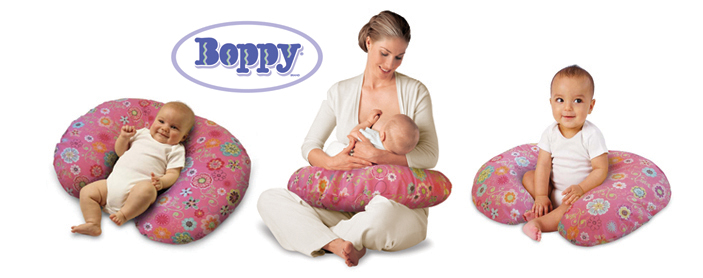
I usually put a small pillow under my arm to help prop Maddy's head and keep it level with my breast. A lot of people swear by Boppy Pillow, and I actually have one ordered off Amazon.


However, sometimes I found the Boppy cumbersome to use. It takes a while to wedge myself inside the curve, which is difficult to do when I'm already holding on to Maddy. It's a bit too thick and heavy to pick up with one hand, so it's necessary that you're already wedged in the Boppy before you can pick up your baby for nursing.  It t kind of only works when you're sitting straight in a chair, and not so much when you're in bed or a low couch.

Kristy mentioned that a rolled up towel will do fine to prop up under your arm.  Personally, I've been more inclined to use a travel neck pillow. It's firm but cushiony, small enough to easily adjust with one free hand and big enough to support Maddy's head.

Happy breastfeeding!

Monday, December 21, 2015

Maddy Turns 1 Month Old!

My baby girl turns a month old today! While she's grown up so fast in the past month, I cannot in truth say that I want her to be a baby forever. I want longer sleep and feeding intervals :D 


The past month, we've learned that:

1. She doesn't like to be disturbed during feeding. That means you can't engage her in too animated a conversation, you can't touch or play with her feet, and you can't bother her with a lot of cooing sounds.

But, she also wants mommy's full concentration during feeding. If she catches me texting or checking facebook, or watching an episode of a tv series on the laptop while I'm breastfeeding, she'll complain and let out a whimper.

2. She's like her mommy - doesn't know how to chill and relax! She's always kunot-nuo, meaning her forehead's always creased with some troubles even when sleeping. My worrywart genes passed on to her :(

3. She loves to stretch during feeding! She'll just stop sucking for a moment, let out a big, long stretch, then resume hehe

4. She makes the cutest Zoolander face when she wants to fart or poop! She purses her lips and her  eyes and face turns really really round.

5. She loves sleeping on my chest although we really try to put her down on her co-sleeper, because of the risks involved - but I minimize these but framing my body left and right with body pillows in case she falls off me.

6. Her deepest longest sleeps are always those after her morning bath and feed. Unfortunately, methinks she's a light sleeper like her mommy and she wakes up so fast at the littlest sound!

7. Our bedtime routine involves a sponge bath and either I read out a story to her or I sing. Her favorites are mommy's wobbly rendition of A Whole New World and Can You Feel the Love Tonight.

8. She enjoys listening to Norah Jones, Michael Buble and Rod Stewart. I think she like soul/blues/jazz.

9. She thoroughly enjoys being brush combed and her eyes just glaze over during brush time. 

10. When she's wailing because she's hungry, no matter how the yaya or her dad soothes her, she'll always abruptly stop crying and calm down when I take her in my arms and/or when she hears my voice telling her to wait, hold on, and mommy's getting ready to feed her.  Those brief 5-10 seconds mommy-powered calmness are priceless.

We love you baby girl!